
DMOC brings next generation C2 to life
The 705th Combat Training Squadron recently executed a virtual Tactical Operations Center – Light experiment in their Distributed Mission Operations Center at Kirtland Air Force Base, New Mexico. The experiment was designed to provide an initial assessment of the functions and manning required to meet combatant commander needs for a rapidly mobile and configurable tactical command and control node to accelerate the kill chain.
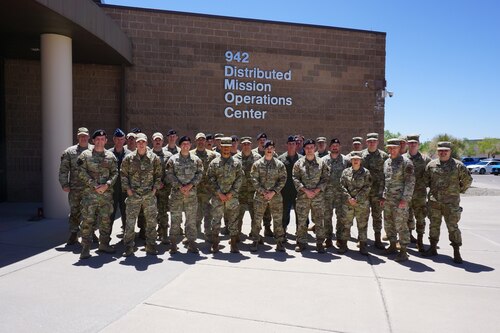
Group photo of U.S. Air Force Airmen participating in the 705th Combat Training Squadron’s virtual Tactical Operations Center – Light experiment at Kirtland Air Force Base, New Mexico, May 2-5, 2022. The experiment was designed to provide an initial assessment of the functions and manning required to meet combatant commander needs for a rapidly mobile and configurable tactical command and control node to accelerate the kill chain. (U.S. Air Force photo by Deb Henley)
A TOC-L is a lightweight, scalable battle management system that enables tactical C2 elements to quickly relocate, establish advanced datalinks, connect to a variety of sensors via a resilient communication structure, and successfully operate in a denied, degraded, or contested operational environment.
This event's primary focus was to leverage the DMOC's capabilities to conduct iterative experimentation with Air Component Control System elements to develop tactics, techniques, and procedures, or TTPs, focused on the agile control integration team, or ACIT, and cross-functional concepts within the TOC-L framework.
DMOC brings next generation C2 to life
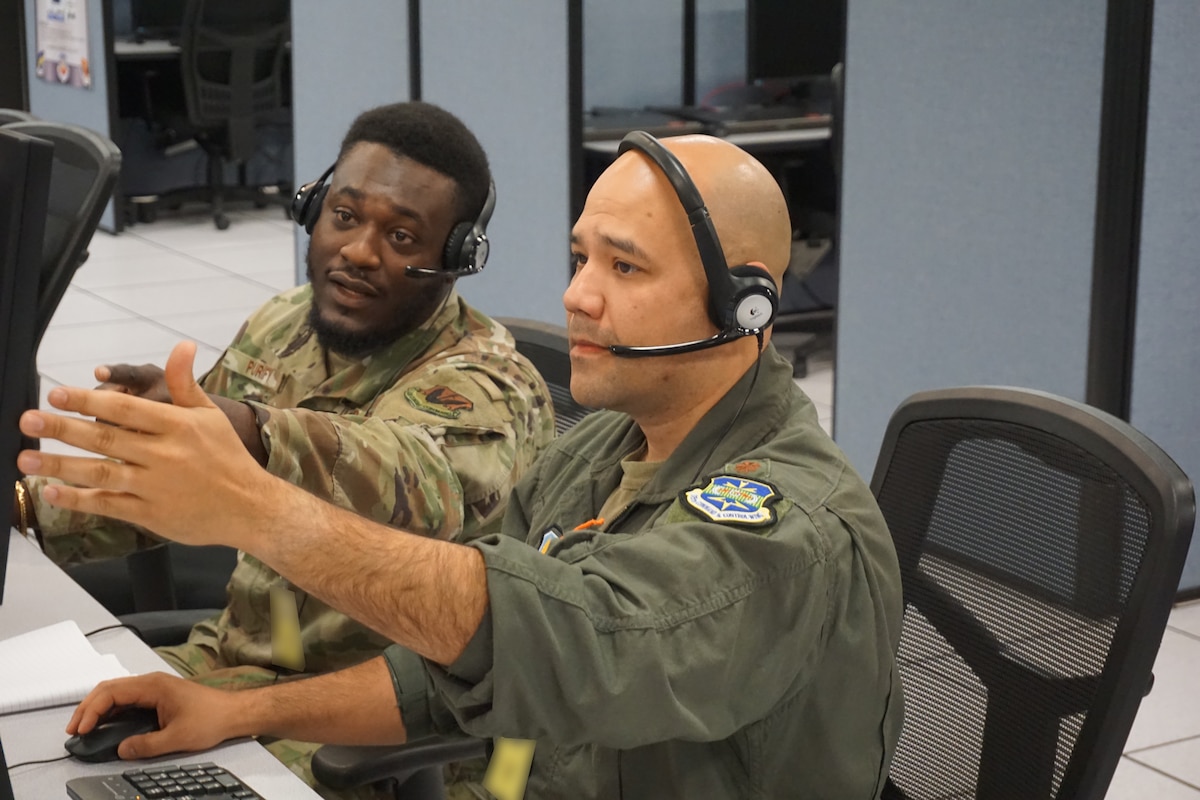
U.S. Air Force Airmen participating in the 705th Combat Training Squadron’s virtual Tactical Operations Center – Light experiment at Kirtland Air Force Base, New Mexico, May 2-5, 2022. The experiment was designed to provide an initial assessment of the functions and manning required to meet combatant commander needs for a rapidly mobile and configurable tactical command and control node to accelerate the kill chain. Two badges blurred for security. (U.S. Air Force photo by Deb Henley)
DMOC brings next generation C2 to life
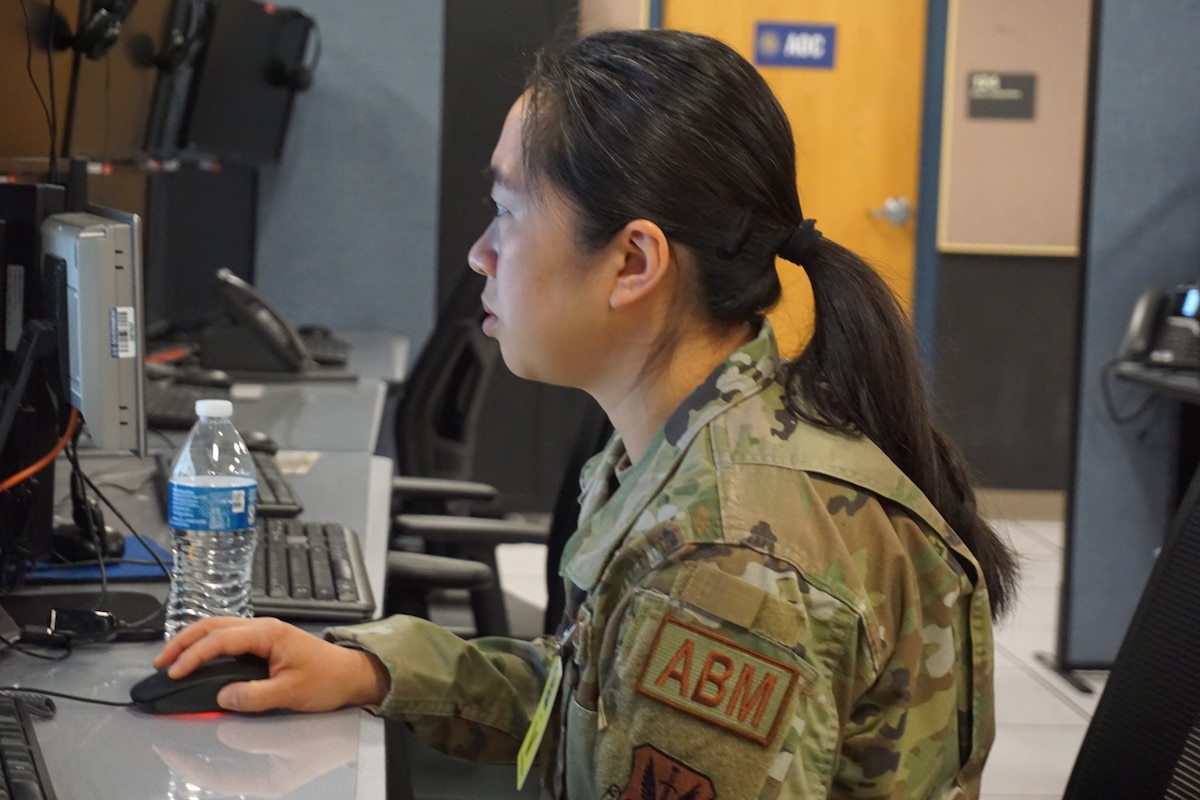
An U.S. Air Force air battle manager participating in the 705th Combat Training Squadron’s virtual Tactical Operations Center – Light experiment at Kirtland Air Force Base, New Mexico, May 2-5, 2022. The experiment was designed to provide an initial assessment of the functions and manning required to meet combatant commander needs for a rapidly mobile and configurable tactical command and control node to accelerate the kill chain. One badge is blurred for security. (U.S. Air Force photo by Deb Henley)
DMOC brings next generation C2 to life
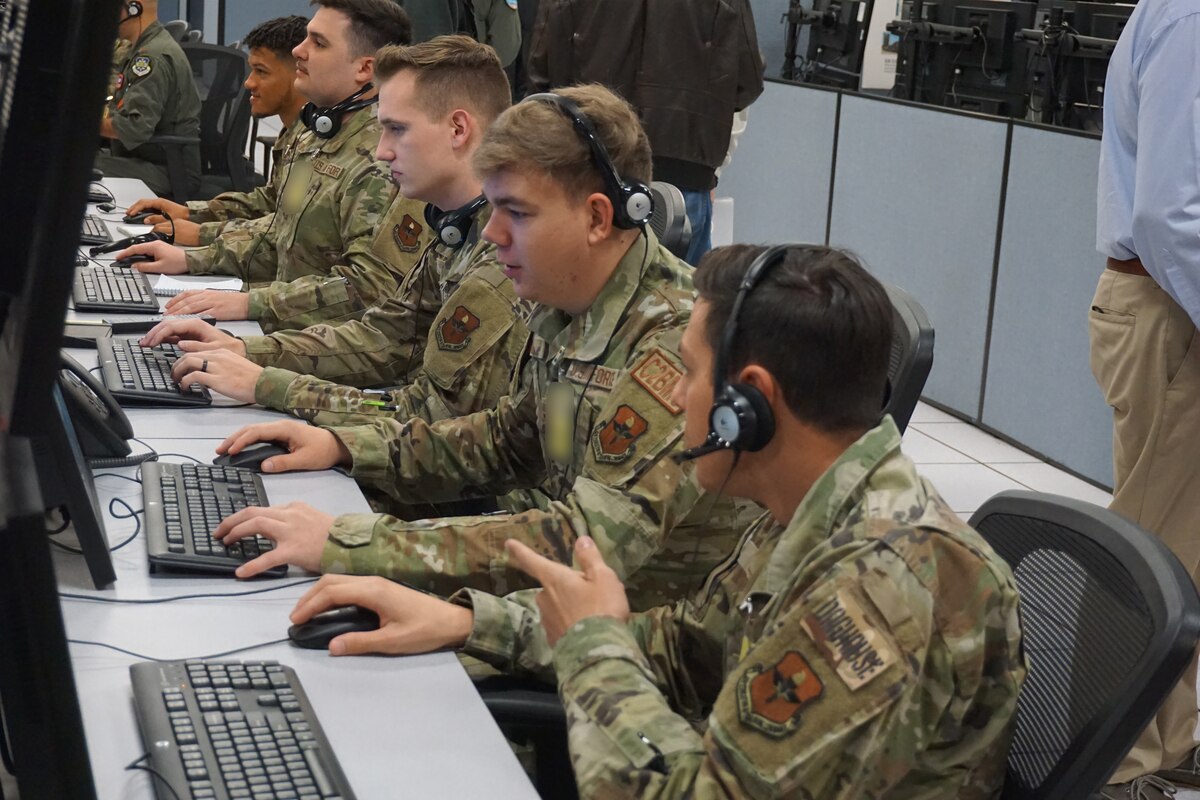
U.S. Air Force Airmen from 337th Air Control Squadron, Tyndall Air Force Base, Florida, participating in the 705th Combat Training Squadron’s virtual Tactical Operations Center – Light experiment at Kirtland Air Force Base, New Mexico, May 2-5, 2022. The experiment was designed to provide an initial assessment of the functions and manning required to meet combatant commander needs for a rapidly mobile and configurable tactical command and control node to accelerate the kill chain. (U.S. Air Force photo by Deb Henley)
“After the conclusion of the Weapons and Tactics Conference 22, it was apparent that some of the things being proposed needed an environment in which to try out the non-material solutions,” said Lt. Col. Michael Butler, 705th CTS director of operations. “The DMOC provided a low-cost, low-risk environment to do so; we also provided expertise in scenario development and execution of the simulation.”
The DMOC built and expanded the virtual scenario for more than 18 months in preparation for the experiment. The DMOC’s simulated scenarios were designed based on current U.S. Indo-Pacific Command adversarial threats and encompassed the vast span of oceans that make up the operational environment.
"The ability to use the DMOC's virtual environment gives us the scope and scale that allows us to put activities that would be theory-only into practice. Through the simulation, we are able to bring cross functional teaming and small team TTPs to life in order to inform ACC CONOPS [concept of operations], CONEMPs [concepts of employment], and requirements," said Maj. Brandon Green, 561st Weapons Squadron, TOC-L chair/air battle manager, Nellis AFB, Nevada.
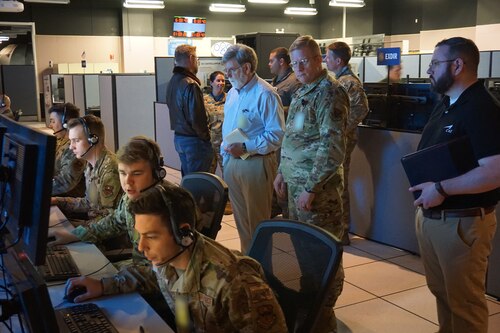
U.S. Air Force Airmen participating in the 705th Combat Training Squadron’s virtual Tactical Operations Center – Light experiment at Kirtland Air Force Base, New Mexico, May 2-5, 2022. The experiment was designed to provide an initial assessment of the functions and manning required to meet combatant commander needs for a rapidly mobile and configurable tactical command and control node to accelerate the kill chain. Multiple badges blurred for security. (U.S. Air Force photo by Deb Henley)
"We're integrating multiple C2 career fields that generally work in tandem with each other, by bringing them together as a small, focused, combined team to execute an emerging mission set for the joint force,” said Maj. Carl Plonk, 605th Test and Evaluation Squadron experiment director, Hurlburt Field, Florida. “The DMOC affords our integrated team a unique opportunity to experiment with new methods of conducting command and control, in a simulated environment. The TOC-L experimentation team is laying the groundwork for the future of C2 for decades to come."
“Tactical command and control operators across multiple AFSCs [Air Force Specialty Codes] are learning to work together in a way they haven’t before and I am excited that they’re doing this at the DMOC,” said Lt. Col. Lindsay Post, 705th CTS commander. “An event like this provides an ideal environment with which to experiment innovative ways of doing business without the pressure of large-force exercise’s desired learning objectives.”
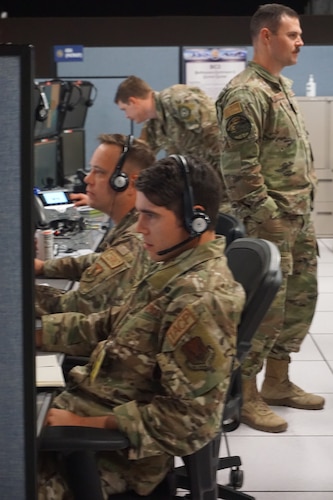
U.S. Air Force tactical air control party, or TACP, Airmen participating in the 705th Combat Training Squadron’s virtual Tactical Operations Center – Light experiment at Kirtland Air Force Base, New Mexico, May 2-5, 2022. The experiment was designed to provide an initial assessment of the functions and manning required to meet combatant commander needs for a rapidly mobile and configurable tactical command and control node to accelerate the kill chain. (U.S. Air Force photo by Deb Henley)
“This TOC-L experimentation was a grass-roots effort to get an initial sense of how we might use this capability to support our combatant commanders. The TOC-L concept has the potential to be a game changer by providing a robust, full-spectrum tactical C2 element in a very small and mobile package that cannot just employ but thrive in a degraded and contested environment,” said Col. Frederick Coleman, 505th Command and Control Wing commander, Hurlburt Field, Florida.
C2 of air, space, and cyberspace forces and real-time surveillance of the battlespace are challenges which are becoming increasingly more complex. The USAF is investing in deployable, scalable, configurable, agile, modular air domain awareness capability and tactical C2 systems through the TOC experimentations.
"The unique thing about the event here right now and the coming iteration VIRTUAL FLAG 22-4 is that it gives us a platform with which to pool TACPs and air battle managers from across the [U.S. Air Force] Warfare Center, USAFE, and PACAF to synchronize developmental tactical C2 efforts across the Air Force. This ensures a CAF [Combat Air Force] TOC-L solution, not just disparate USAFE TOC-Ls or PACAF TOC-Ls,” said Green.
The next two TOC-L experiments will test the USAF’s ability to integrate a host of networked systems as well as co-located and distributed Internet Protocol-based sensors make it a highly suitable to meet future missions. These missions will include weapons control, force accountability/airspace deconfliction, surveillance, joint fires coordination, integrated air and missile defense, and air base air defense.
TACP participants will integrate lessons learned and TTPs using Nellis’ missions with no additional sortie generation.
“Regardless of the purchasing or fielding decisions that higher headquarters make, the work being accomplished at the DMOC can be readily exported to the solution and can continue to be built upon in future events. This is a model that the Air Force can use for other projects,” said Col. Aaron Gibney, 505th Combat Training Group, Nellis AFB, Nevada.
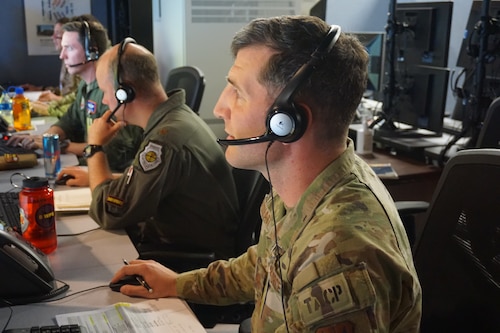
U.S. Air Force Airmen participating in the 705th Combat Training Squadron’s virtual Tactical Operations Center – Light experiment at Kirtland Air Force Base, New Mexico, May 2-5, 2022. The experiment was designed to provide an initial assessment of the functions and manning required to meet combatant commander needs for a rapidly mobile and configurable tactical command and control node to accelerate the kill chain. (U.S. Air Force photo by Deb Henley)
The 705th CTS reports to the 505th Combat Training Group, Nellis AFB, Nevada, and the 505th Command and Control Wing, headquartered at Hurlburt Field, Florida.
